
علی گودرزوندچگینی
مهندس کنترل


یادگیری عملی، تیم سازی و تجربه واقعی برای آینده کاری

This paper introduces a groundbreaking approach to demand response management, aiming to empower consumers through innovative strategies. The key contribution is the concept of “acquiring flexibility rights”, wherein consumers engage with power aggregators to curtail energy usage during peak-load periods, receiving incentives in return. A flexibility right coefficient is introduced, allowing consumers to tailor their participation in demand response programs, ensuring their well-being. Additionally, a lighting intensity control system is developed to enhance residential lighting network efficiency. The study demonstrates that high-energy consumers, adopting a satisfaction factor of 10, can achieve over 61% in electricity cost savings by combining the lighting control system and active participation in demand response programs. This not only reduces expenses but also generates income through the sale of flexibility rights. Conversely, low-energy consumers can fully offset their expenses and accumulate over USD 33 in earnings through the installation of solar panels. This paper formulates an optimization problem considering flexibility rights, lighting control, and time-of-use tariff rates. An algorithm is proposed for a distributed solution, and a sensitivity analysis is conducted for evaluation. The proposed method showcases significant benefits, including cost savings and income generation for consumers, while contributing to grid stability and reduced blackout occurrences. Real data from a residential district in Tehran validates the method’s effectiveness. This study concludes that this approach holds promise for demand response management in smart grids, emphasizing the importance of consumer empowerment and sustainable energy practices

Smart grids play a crucial role in transitioning to a low-carbon energy sector by ensuring the efficient and sustainable utilization of natural resources, such as wind generation. The high penetration rate of intermittent wind generation in competitive smart power systems necessitates the development of more sophisticated support schemes for this resource. Most current policies rely on financial incentives for wind generation. However, determining the cost of these support schemes in a competitive electricity market poses a significant challenge, which is addressed in this paper. In this paper, the Generation Expansion Planning (GEP) model is developed to design an environmentally-based incentive mechanism for wind generation in a smart, competitive power system. The GEP model examines the non-cooperative competition of generators at two layers. At the top layer, the generation investment game is analyzed, and at the bottom layer, the Cournot game at the power network operational level is examined. A solution algorithm based on Q-learning is used for the two-layer model, demonstrating how these layers interact to obtain environmental incentives by solving the multi-year generation expansion problem. This framework is implemented on a test system to demonstrate the effectiveness of the proposed approach. The outputs of the numerical studies include the expansion strategies of generation firms, the total profit of the wind power plant firm, the cost of the incentive mechanism for wind generation, the Wind Penetration Index (WPI)
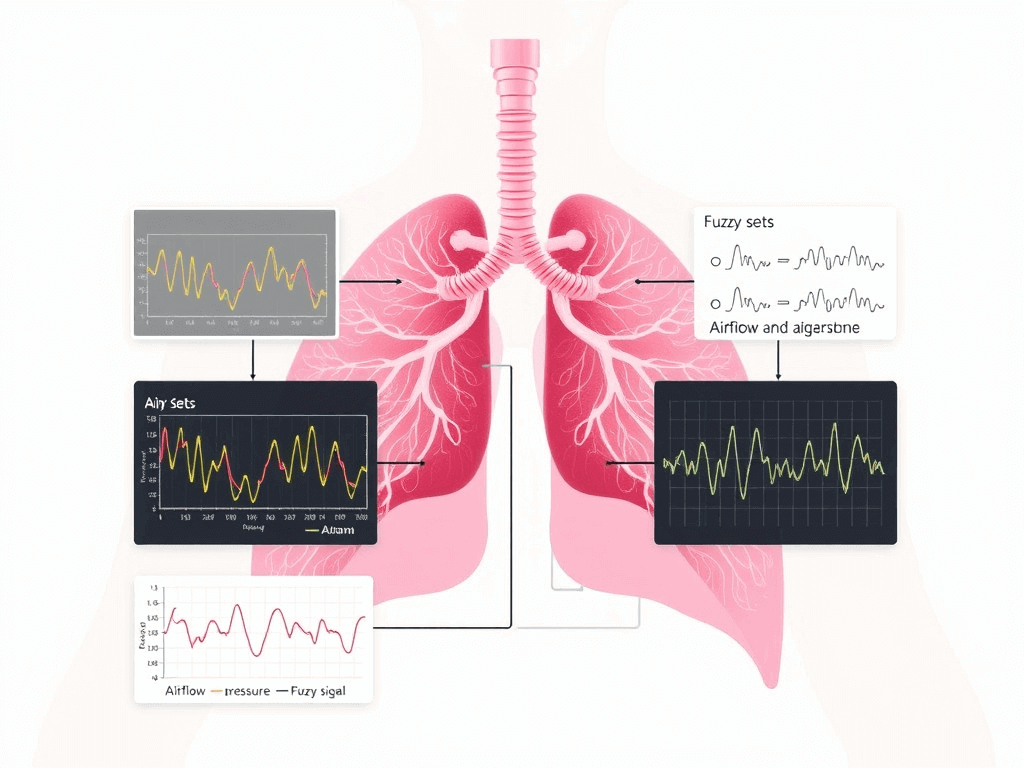
A respiratory system combines a blower-hosepatient setup with a single lung system featuring nonlinear lung compliance. This paper explores the optimal design of resilient fuzzy control for such systems by integrating a fuzzy algorithm with a sliding mode control approach. The robust fuzzy controller, as proposed, effectively handles the system’s dynamics and remains stable amidst nonlinear changes. It ensures airway flow and maintains peak pressure below critical levels despite uncertainties like hose leakage and varying respiratory effort. The findings show superior performance in reaction time, overshoot, and tracking errors compared to traditional methods. The control mechanism’s parameters rise time, peak value, heave, and settlement values are independently computed, revealing an over 18% improvement in rise time and a more than 44% reduction iRobust Fuzzy controller design for respiratory systemsn settling time. Simulations indicate the robust fuzzy controller outperforms the PID controller, demonstrating its efficacy for respiratory system control
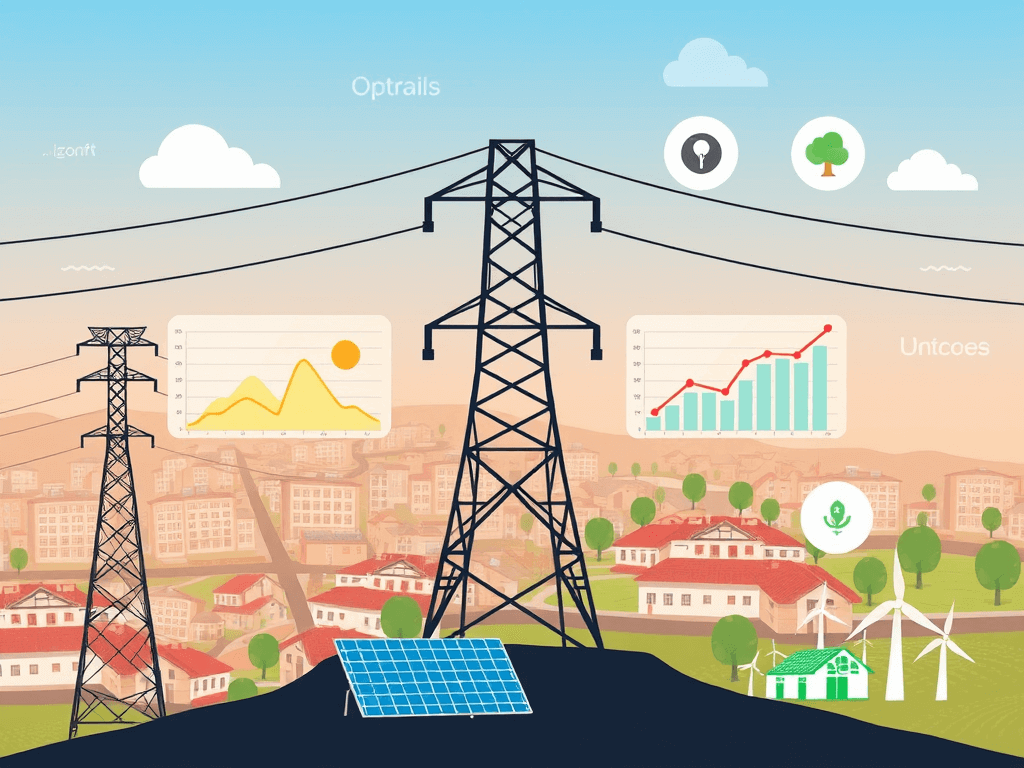
Apart from the objective of optimizing electricity bills by enhancing consumption patterns, the implementation of dynamic pricing for electric energy can facilitate the redistribution of demand from peak hours to non-peak hours. This strategic approach aims to effectively manage congestion issues and enhance the overall stability of the system. Therefore, it becomes crucial to determine tariff rate modifications by taking into account the demand side’s elasticity and devising a strategy that maximizes the profitability for all stakeholders. In this study, two distinct time-of-use (ToU) tariffs, specifically a two-level and three-level structure, are utilized alongside the modeling of consumers’ elastic behavior. The primary goal is to design an optimal tariff rate scheme that simultaneously maximizes the company’s profits and minimizes the consumers’ electric energy bills. To accomplish this, a genetic algorithm is employed to derive the most favorable tariff structure. The evaluation of the proposed strategy is con-ducted on the 24-bus IEEE system. To capture the diversity in consumers’ consumption patterns, all loads are categorized into five distinct groups, with three categories representing residential loads and two categories representing industrial loads. The results obtained from the analysis demonstrate that by implementing an appropriate three-level ToU tariff and considering operational constraints, a substantial shift of more than 4.7% for residential loads and over 5% for industrial loads during peak hours can be achieved, redirecting them towards off-peak hours

Although, Mushroom cultivation is a growing industry for recent years, but maintaining proper conditions in mushroom farms may be challenging, especially for small-scale farmers without accessibility to modern controller systems. In this paper, a new IoT-based approach based on Blynk platform for mushroom cultivation is presented. The Blynk dashboard includes gauges for monitoring humidity and temperature in real time, as well as sliders for controlling the environment situations. The sliders are connected to relays which are powered by a solar power system. This mechanism making it a proper option for using in a remote locations without access to main grid, also the low cost of the system makes it an affordable option for small-scale farmers. For improving the identification characteristic, a hybrid method consists of differential evolution algorithm and wavelet transform is used. The model is a classification model trained on a dataset of healthy and diseased mushrooms, which can determine the real-time conditions of mushrooms. For practical applications, reducing the number of extracted features and minimizing redundancy features have great importance. In the proposed method, features are extracted from the original data by applying differential evolution algorithm. Then these features were evaluated by methods such as logistic regression, k-nearest neighborhood and decision tree. It was found that among the specified features, the first two features covered more than 89% of the variance of the entire set. Then the wavelet transform method is applied to get final identifications. Finally, by reducing the number of features to 2, a .considerable amount of calculations is reduced and only about 4% of the accuracy provided for the estimated results is reduced

📌 فراهم کردن زمینه مهاجرت با زحمات و مشکلات فراوانی همراه است، و پس از آن، شما با سفری پیچیده […]

📌 تاثیر شناخت ارزشها در تصمیمگیریهای روزمره، روابط، و انتخابهای شغلی 📌 تفاوت بین ارزشهای واقعی و ارزشهای تحمیلشده (مثل […]

🎯 آیا آمادهاید تا مسیر موفقیت خود را هموار کنید؟ 🔑 در این سمینار یاد میگیریم: ✅ چگونه بهتر فکر […]